
Piano Practice - Set the Tone


Make it a Habit
Practicing is a skill in itself and developing a consistent practice routine involves dedication and patience. It takes at least 6 weeks to develop a new habit!
The goal of practice isn't to push harder each day, but to set a a tone your body and brain can return to easily.
Try to play at the same time each day and start small. Consistency is more important than absolute time spent.
Music - especially the physical conditioning side of things - cannot be “crammed.”
Guidelines
Assignments are sent to the student after each lesson, so there are guidelines about which exercises and songs should be played each week.
I encourage my students to practice for repetitions rather than for time. In other words: play each of your assignments three times during each practice session rather than committing to playing for 15 minutes. Practicing for repetitions helps students stay focused without needing to push through fatigue.
While there's no need to set a timer, it can be good to know that early assignments can be completed in approximately 5 minutes per day, 4 days per week.
As the student advances, the assignments will lengthen, as will the capacity to improvise, compose and play repertoire pieces - so time spent practicing naturally increases as well.
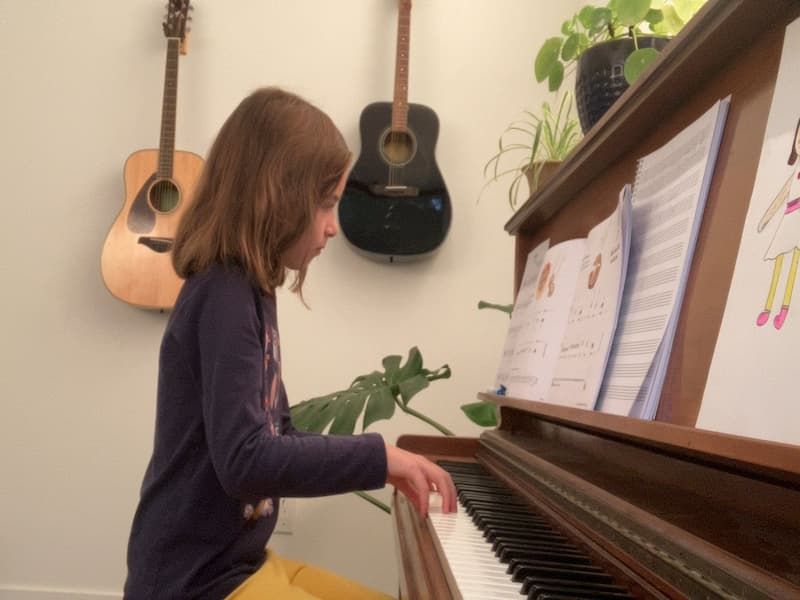
Repetition
Focused repetitions are the name of the game when it comes to learning music and technique. Change things up as you repeat: close your eyes, play softer or louder, faster or slower, etc.
Stretch your body in between and get up anytime you feel inclined. Come back to the piano when refreshed and try a few more repetitions.
Stopping before frustration sets in is more effective than pushing through.
Fun
Take time to have fun every time you play! You got into piano to enjoy playing so make sure you're taking time to actually enjoy playing!
If there's nothing you particularly like on your practice sheet, play an older favorite song, do some improvisation or learn some chords for a new favorite song.
For the Littles
Students ages 4-7 will likely need and benefit from a parent practicing with them each day. Helping them read the assignments, reminding them of technique goals, and offering words of encouragement makes a big difference over time!
There’s no need to try to “teach piano” during these practice sessions. Your presence matters more than connecting notes.
People of all ages can benefit from visual reminders and rewards for practice. Whether it’s a scheduled phone reminder or an activity chart; a night out to celebrate three months of lessons or a new Squishmallow to celebrate 6 weeks of regular practice -
- find ways to show yourself that your music studies are meaningful and worthwhile.
If you'd like support buliding a practice routine that fits your life, you're welcome to reach out or try a lesson to see how it feels in real time.